



Behind the Stone: How We Craft Quality Tombstones and Monuments in Our Factory
At Fortune East Stone, we don‘t just supply tombstone products. We bring dignity, memory, and permanence to life’s final resting places.
Our factory operates with a simple belief: every stone grave deserves respect. That belief drives how we cut, polish, inspect, and pack every granite piece before it leaves our door.
Below, we walk you through the key stages of our production process — exactly as seen in our factory photos.
1. Raw Block Selection – The First Step to a Lasting Monument
Every high-quality tombstone starts with the right raw block.
We source natural stone from selected quarries
Each block is inspected for cracks, color consistency, and density
Only granite blocks with uniform structure enter our production line
Why granite for a stone grave? Because granite offers the highest resistance to weather, acid rain, and temperature changes. A tombstone made from granite can last for centuries with minimal fading.
2. Block Cutting – Precision Sizing for Every Monument
Once a granite block passes inspection, it moves to our multi-blade cutting station.
Infrared bridge cutters ensure straight, accurate cuts
Thickness tolerance: ≤ 1 mm
Standard tombstone blanks are cut to common dimensions (60x40cm, 80x50cm, 100x60cm, etc.)
Custom sizes for larger monument projects are also available
In our factory video, you can see how water jets cool the blades during cutting — this reduces friction and prevents micro-cracks in the tombstone material.
3. Surface Processing – From Rough Stone to Smooth Finish Tombstone
A stone grave should feel as good as it looks. That‘s why surface processing is one of our most carefully managed steps.
We offer multiple finishes, depending on the monument design:
Finish Type | Appearance | Best For |
Polished | Mirror-like, high gloss | Modern tombstone designs |
Honed | Smooth but matte | Natural, understated stone grave |
Flamed | Textured, non-slip | Outdoor monument bases |
Bush-hammered | Rough, antique look | Traditional tombstone styles |
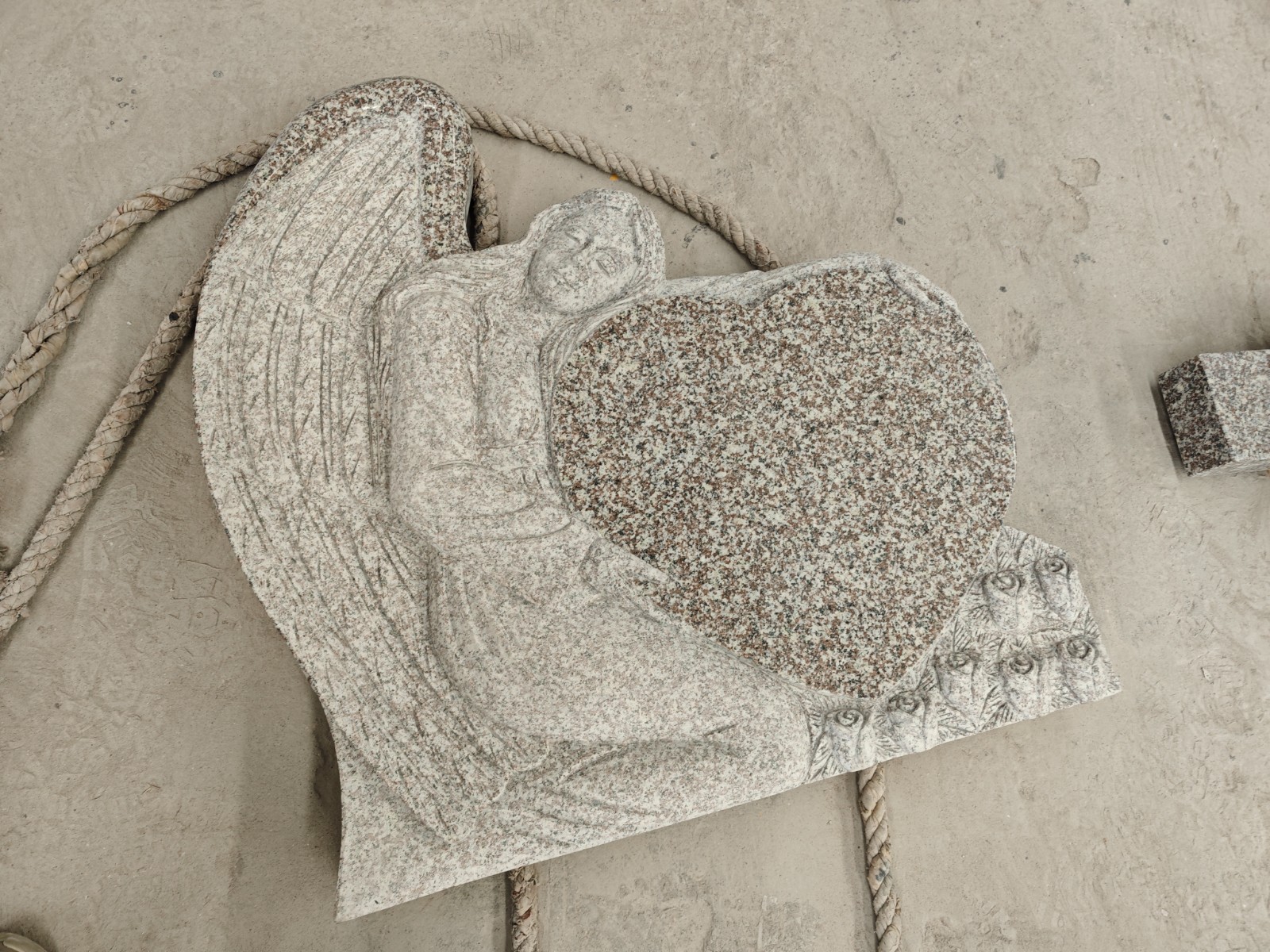
*Semi-manufactured tombstone part*
4. Edge Profiling – Small Details That Define a Tombstone
Edge style might seem minor, but it strongly affects the final look of a monument.
Our craftsmen can produce:
Straight edges – clean and economical
Beveled edges – adds depth to a tombstone
Bullnose edges – fully rounded, soft to touch
OG (ogee) edges – classic, decorative profile for larger monuments
We also have the edge polishing machine. It can use sequential diamond wheels from coarse to fine — 50 grit, 200 grit, 500 grit, then 1000 grit — to achieve a smooth, uniform curve on every granite piece.
5. Sandblasting & Carving – Turning Stone into a Personal Memorial
This is where a flat granite slab becomes a meaningful stone grave.
We use:
Computer-controlled sandblasting for lettering and simple patterns
Manual hand-carving for complex designs (crosses, flowers, angels, etc.)
Our sandblasting room is enclosed and ventilated. The operator applies a rubber stencil first, then blasts high-pressure abrasive at the exposed areas. This creates deep, long-lasting engravings on the tombstone material.
For granite monuments, we recommend a minimum engraving depth of 3 mm. Shallower engravings fade faster, especially in outdoor cemeteries.
6. Polishing – The Step That Brings Granite to Life
Polishing is where granite reveals its true beauty. A poorly polished tombstone looks dull and cheap. A well-polished one reflects light and feels smooth to the hand.
Our polishing line follows a strict 7-step process:
1. Coarse grinding – removes saw marks
2. Medium grinding – evens out the surface
3. Fine grinding – prepares for gloss
4. Pre-polishing – starts building shine
5. First polish – achieves ~60% gloss
6. Second polish – reaches ~85% gloss
7. Final polish – full mirror finish (≥95% gloss on a gloss meter)
Each granite piece is polished by machine but inspected by hand at every stage. In our tombstone factory photos, you can see workers wiping the surface with cloths between steps — that‘s how we catch tiny scratches early.
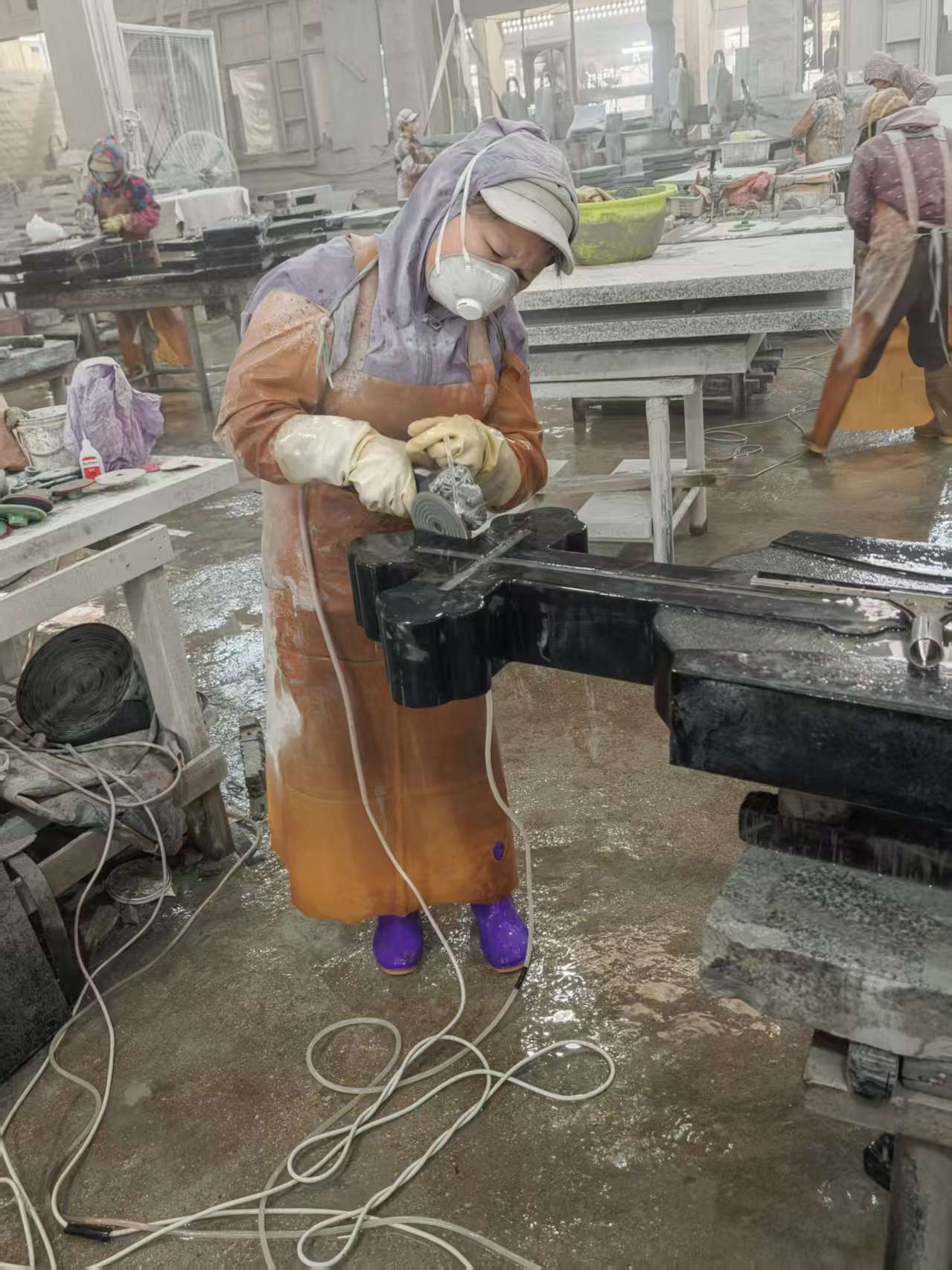
Tombstone Polishing
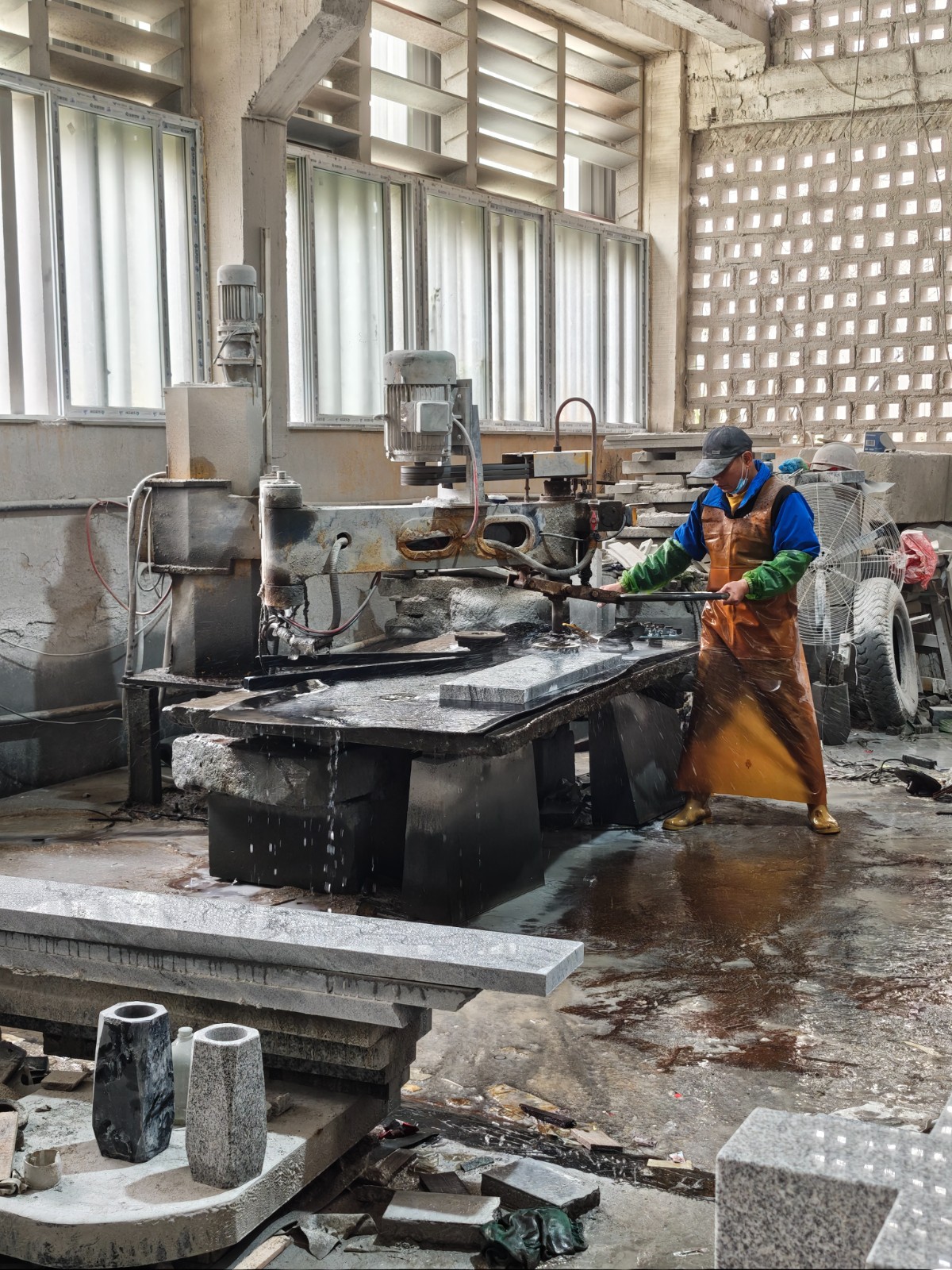
Tombstone Polishing
7. Worker‘s Care – The Human Touch Behind Every Monument
Machines cut and polish, but people ensure quality.
Our team inspects every tombstone at least three times:
After cutting – check dimensions, cracks, and chipped corners
After polishing – check gloss uniformity and surface scratches
Before packing – final visual check under natural light
Here are some things our workers look for that machines often miss:
l Micro-pits on the granite surface
l Inconsistent gloss between adjacent tiles
l Hairline fractures near drilled holes
l Residue left from polishing compounds
One of our senior polishers has worked with granite for 16 years. He can detect a 0.2 mm surface irregularity just by running his palm over the stone grave surface. That level of care is not replaceable by automation.
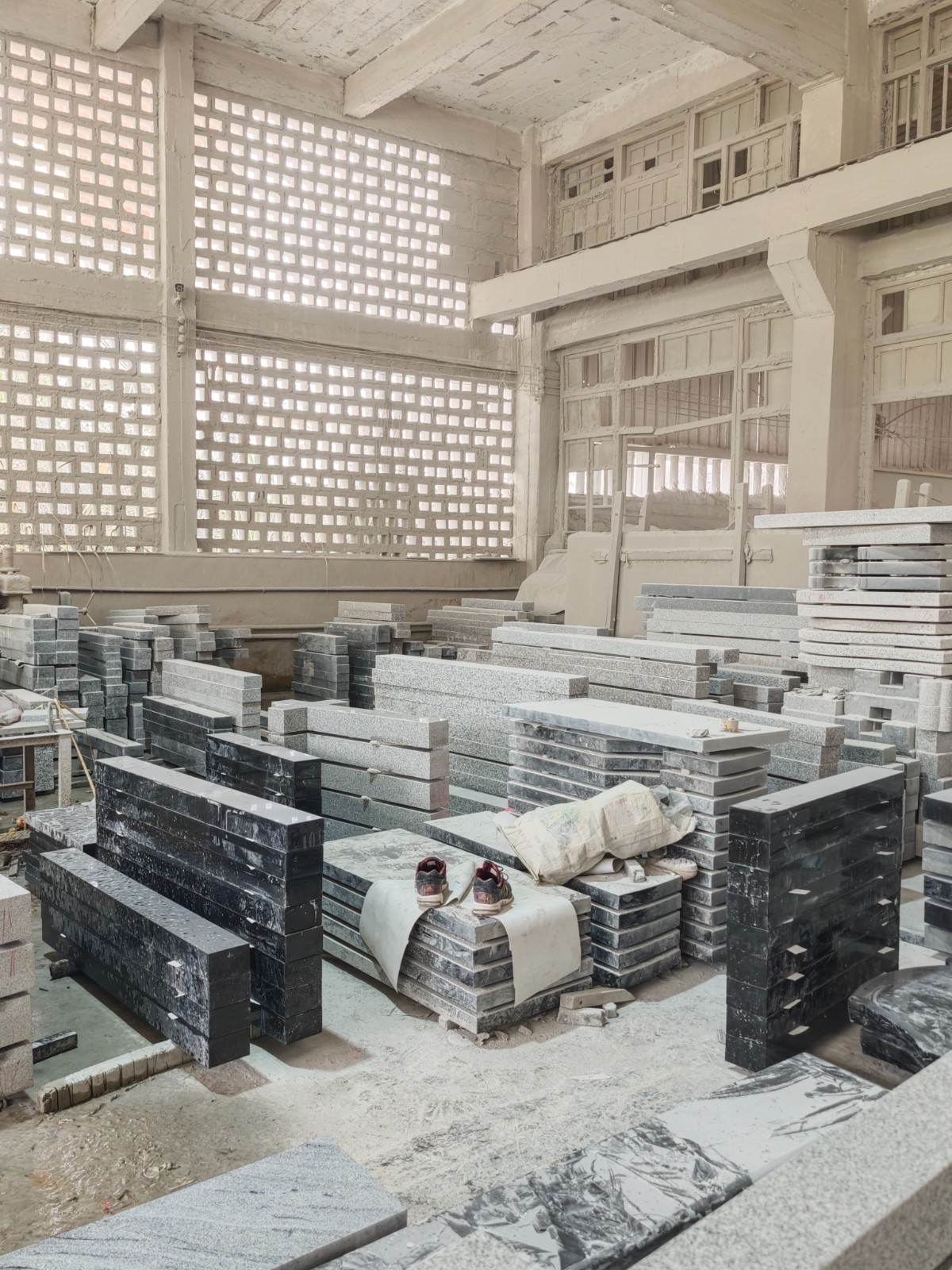
Semi-manufactured granite
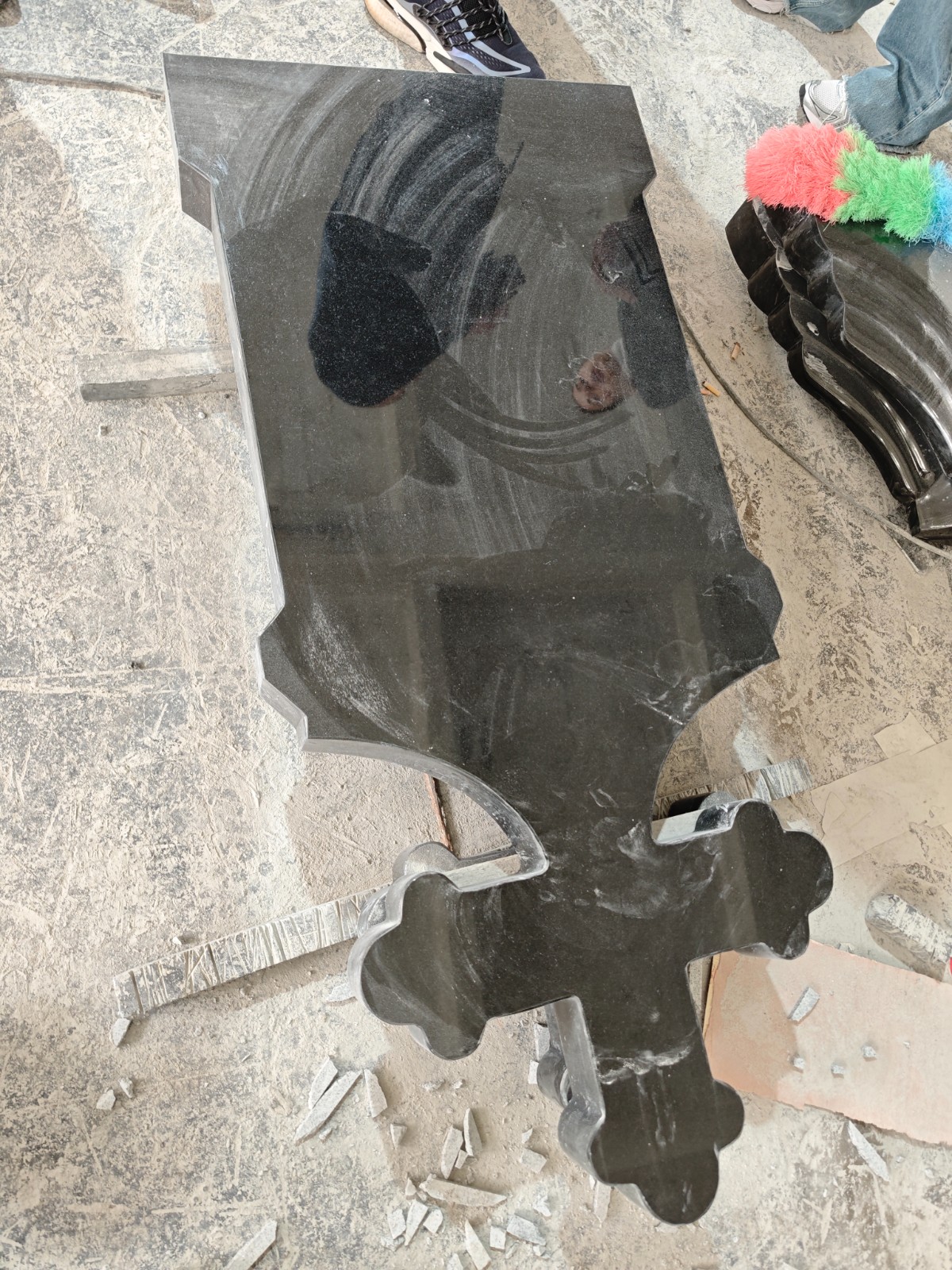
Granite Monument
8. Quality Control – Testing Tombstone Material Before Shipping
We don‘t assume quality — we test it.
Every batch of tombstone material goes through:
Test | Purpose |
Water absorption | Granite should absorb <0.5% by weight |
Freeze-thaw resistance | Simulates 25 winter cycles |
Flexural strength | Ensures monument won‘t crack under wind load |
Abrasion resistance | Polished surface should withstand foot traffic (for ground-level stone grave markers) |
Only batches that pass all tests are approved for packing.
About Us
Silvia | Fortune East Stone
📧Email: sales05@fortunestone.cn
📞Phone/Whatsapp: +86 15960363992
🌐Websites: www.fortuneeaststone.com
🌐About Us : https://www.festonegallery.com/
