

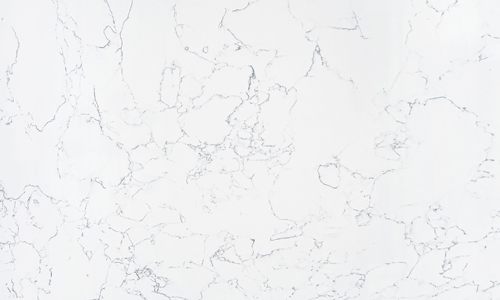
The Last Two Slabs: A Separation Method You Won't Expect
Watch the video to see how our factory workers separate the final two slabs — a technique that looks simple but surprises most stone buyers.
1. You Have Probably Never Seen This Done
If you have visited stone factories before, you have seen blocks being cut into slabs. You have seen polishing lines, resin lines, and packing stations.
But here is something most buyers never get to see up close:
How workers separate the last two natural stone slabs after cutting.
Not the first slab. Not the middle slabs. The final two.
When a gang saw or multi-blade machine finishes cutting a block of natural stone, the final two slabs are often still pressed tightly together. There is no gap. No easy grip point. They look like one single thick piece. This is a common situation when working with natural stone, especially dense materials.
So how do you pull them apart without chipping, cracking, or damaging the polished surface of the natural stone?
The answer might surprise you.
2. Why This Step Matters More Than You Think
You might wonder: why make a big deal out of separating two slabs of natural stone?
Here is the reality.
If a worker uses too much force, the granite or marble can crack along a weak vein. Granite is strong, but it is not unbreakable. If they insert a metal tool in the wrong way, the edge chips. If they pull from the wrong corner, the slab tilts and falls.
A single mistake at this stage can turn a sellable slab of natural stone into scrap. When that slab is granite, the loss is even more costly because granite commands higher prices per square meter.
That is why our factory treats this separation step as a skill — not just a task. Every piece of natural stone, whether granite or marble, deserves careful handling.
 Video<< Slabs Separation 2.mp4
3. What the Video Shows (Watch Closely)
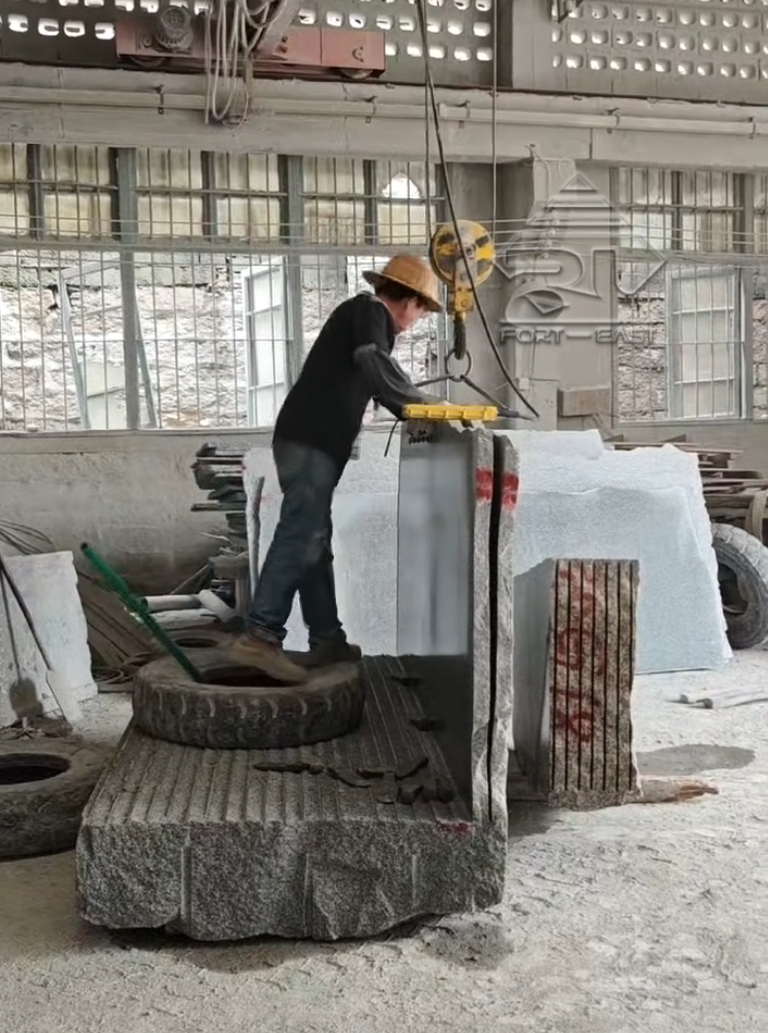
In the video on this page, you will see our workers approach the last two slabs of a natural stone block.
Here is what happens step by step:
Step 1 – Inspection
The worker runs a hand along the side of the two slabs to feel for any natural stone separation line. With granite, the joint is often invisible to the eye but detectable by touch. This is one of the unique characteristics of natural stone — no two blocks are exactly the same.
Step 2 – Wedge Placement
Instead of prying from the top, the worker inserts two thin wedges from the bottom side — where the slabs are slightly less polished and grip is safer. For granite slabs, this bottom approach is especially effective because granite has a denser structure that holds suction longer.
Step 3 – The Unexpected Move
This is where most visitors raise their eyebrows.
The worker does NOT pull the slabs apart.
Instead, they gently tap the wedges in opposite directions while applying a light vacuum cup near the center of the top slab. No jerking. No hammering. Even with heavy granite, this gentle approach works perfectly.
Step 4 – Air Release
As the wedges create a micro-gap, air rushes in between the two slabs. The vacuum breaks instantly. The top slab lifts away cleanly.
No chisel marks. No edge damage. No noise. The natural stone surface remains exactly as it came out of the cutter.
4. Why This Method Works (The Simple Physics)
You do not need an engineering degree to understand this.
When two slabs of natural stone come out of a multi-blade cutter, there is a thin film of water and slurry trapped between them. That film creates suction — similar to how two wet glass plates stick together. With granite, this suction effect is even stronger because granite has a very smooth, non-porous surface after cutting.
If you try to pull them apart directly, you are fighting against atmospheric pressure, not just weight. A large granite slab can have over 200 kilograms of suction force holding it down.
The trick is to break the seal first, not to overpower the suction.
By inserting wedges from the bottom and allowing air to enter the middle, the worker separates the slabs using air, not force. This works on any natural stone, but it is especially satisfying to watch on thick granite slabs.
That is why you will never see our workers using crowbars or hammers on finished marble or granite surfaces. The natural stone never gets abused.
5. What Makes This Method "Unexpected"
Most people — even experienced natural stone buyers — assume that separating tight slabs requires heavy tools or multiple workers pulling in opposite directions. For granite, many assume you need even more force because granite is so heavy.
Some factories still do it that way.
But those methods leave marks. They create micro-cracks. And they put workers at risk of back strain or falling slabs. With granite, the weight makes these risks even more serious.
Our method is unexpected because:
It is quiet – No loud impacts or grinding sounds. Even on thick granite, the process is silent.
It is fast – Two slabs of natural stone separated in under 90 seconds.
It is gentle – No metal touches the finished face of the natural stone.
It looks too simple – First-time viewers often ask, "That's it?" Especially when they see it done on granite.
Watch the video again after reading this. You will notice the small details — the angle of the wedges, the placement of the vacuum cup, the timing of the air release. On granite, these details matter even more because granite leaves no room for error.
6. How This Protects Your Slabs
When you buy granite or marble from Fortune East Stone, the slabs you receive go through this careful separation process. Every piece of natural stone in our yard is handled the same way.
Here is what this method prevents:
Problem | Typical Factory | Our Method |
Edge chipping | Common with metal prying | None |
Surface scratches | Possible | Zero contact on face |
Hidden cracks | Hard to detect | No stress applied |
Slab tipping | High risk | Controlled lift |
Worker injury | Back strain, cuts | Low effort, safe stance |
Every slab of natural stone that leaves our factory has been handled using techniques that prioritize the material's integrity over speed. Whether it is granite or another natural stone, the standard is the same.
7. A Deeper Look: Why Other Factories Don't Always Do This
You might now wonder: if this method is so effective for natural stone, why doesn't every factory use it?
Two reasons.
First, it takes practice.
A new worker naturally wants to pull or pry. Teaching them to let air do the work goes against instinct. With granite, the instinct to use more force is even stronger because granite feels heavy and solid. It takes about two weeks of supervised separation practice before a worker becomes confident with this technique on all types of natural stone.
Second, it requires patience.
When an order is late, some factories rush. Rushing leads to crowbars. Crowbars lead to chips. Chips lead to unhappy customers. For granite buyers, a chipped edge often means remaking the entire countertop.
We built our reputation on natural stone that arrives in the same condition it left the block — not on speed alone. That is true for granite, marble, and every other natural stone we handle.
8. What Kind of Natural Stone This Applies To
This separation method works on virtually all types of natural stone, but it is especially important for:
Granite – Dense and heavy. Without proper separation, granite slabs are extremely difficult to pull apart once pressed together. The suction on granite is stronger than on any other natural stone.
Marble – Softer and more prone to edge damage. Gentle separation is critical for this beautiful natural stone.
Limestone – Porous. Metal tools can leave dark marks on this natural stone.
Quartzite – Very hard but brittle. Sudden force can cause unexpected fractures in this natural stone.
If you buy granite countertops or marble flooring from us, you can be sure that every slab of natural stone was separated using this controlled, low-impact method. Granite buyers especially appreciate this attention to detail.
9. What Factory Visitors Say When They See This
We regularly invite buyers to visit our factory. Most of them have seen natural stone cutting and polishing before.
But when they reach the slab separation station, the reaction is almost always the same:
"Wait — that's how you do it?"
"I thought you would use a forklift or something on granite."
"Can you show me that again with a different natural stone?"
One buyer from a European tile company recorded our separation process on his phone and sent it to his quality control team. He later told us: "My team didn't believe it was that simple. They thought we edited the video. Especially the part with the granite slab — they said granite shouldn't lift that easily."
We didn't edit anything. That is simply how we handle natural stone when precision matters. Granite, marble, or any other natural stone — the method works the same.
10. Seeing Is Believing — Watch the Full Video
Reading about the separation method for natural stone is useful. Watching it happen on actual granite is entirely different.
In the video on this page, you will see:
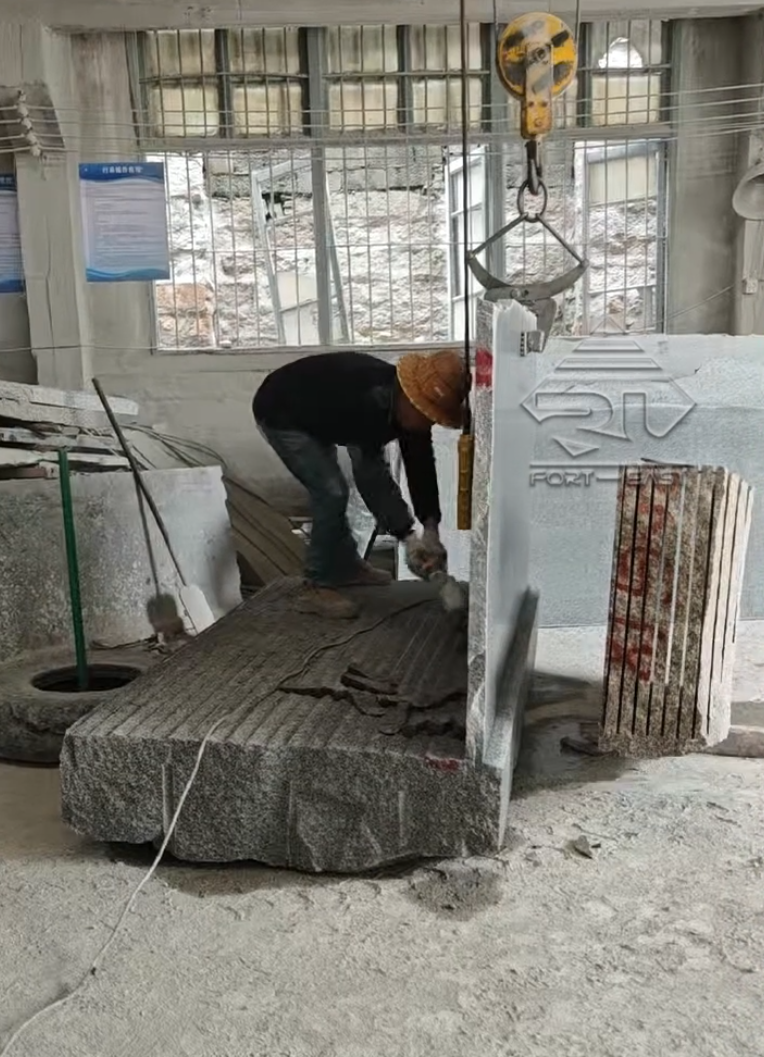
A full, unedited separation of the last two granite slabs from a recent production batch
Close-up shots of the wedge placement and air release on natural stone
The final inspection of both separated slabs — completely undamaged
You will see granite slabs lift away as if by magic — but it is just physics.
Video<< Slabs Separation 1.mp4
11. Why Fortune East Stone Shares This Detail
Some natural stone suppliers only show you the finished product. They do not show you how they handle the material between the saw and the packing crate. Fewer still will show you how they treat granite specifically.
We believe that how you handle natural stone during production tells you more about a supplier than their showroom does. When that natural stone is granite, the handling method reveals even more about the supplier's standards.
By showing you our separation method — an unusual, gentle, physics-based technique for natural stone — we hope to demonstrate a simple fact:
We treat natural stone like a finished surface from the moment it leaves the saw.
Not when it reaches your workshop. Not after polishing. Immediately. Whether it is granite or marble or any other natural stone, the standard never drops.
12. Final Thoughts: The Small Details Matter in Natural Stone
In the natural stone business, the difference between a good slab and a great slab is often invisible to the untrained eye.
A hairline crack you cannot see until fabrication.
A chipped edge hidden by the first cut.
A stressed marble slab that breaks during transport.
A granite slab that fails at the thinnest point because of hidden micro-cracks.
These problems do not start at the factory gate. They start at the handling station. With granite, the problems often start earlier because granite is harder to separate cleanly.
Our separation method for the last two slabs of natural stone is just one small example of how we pay attention to details that other factories overlook. It will not make headlines. It will not double your production speed.
But it will deliver granite, marble, and other natural stone slabs that arrive intact, ready to fabricate, and free of hidden damage. When you buy granite from us, you are buying more than a natural stone — you are buying peace of mind.
Watch the video. See for yourself. Then ask your current supplier how they separate their last two slabs of natural stone — especially if those slabs are granite.
About Us
Silvia | Fortune East Stone
📧Email: sales05@fortunestone.cn
📞Phone/Whatsapp: +86 15960363992
🌐Websites: www.fortuneeaststone.com
🌐About Us : https://www.festonegallery.com/
